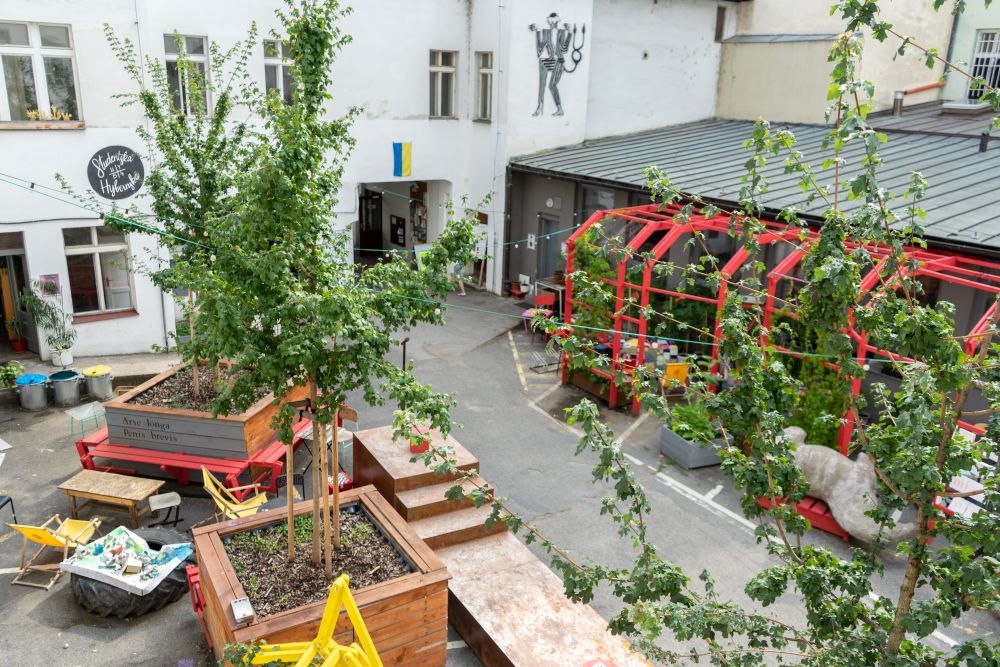
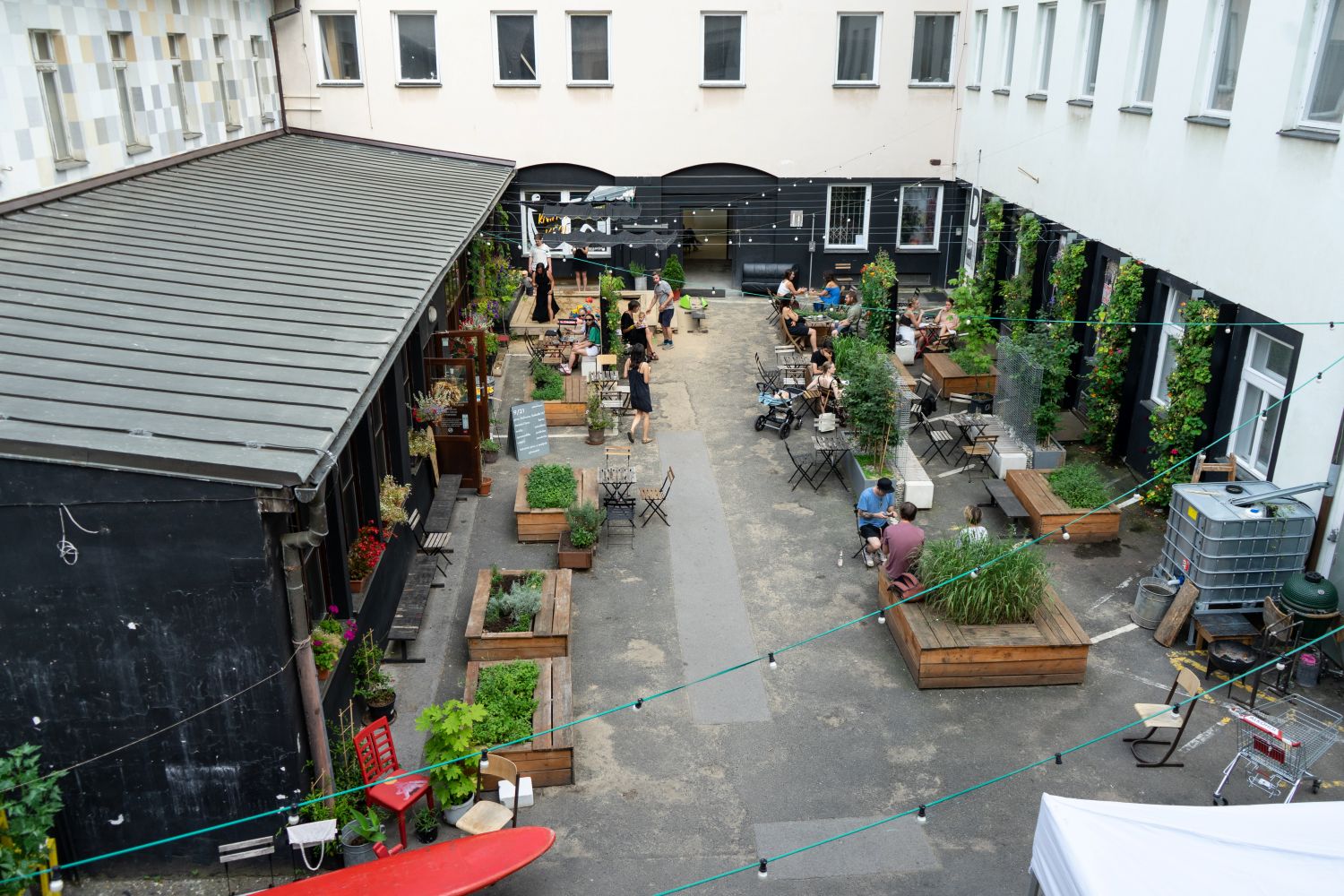
Kampus Hybernská is entering a new phase of its development. After nearly two years of preparation, a major reconstruction of the courtyard at Hybernská 4 will begin in the autumn of 2026, transforming the currently paved inner courtyard into a model example of blue-green infrastructure in the heart of Prague's historic center. For Kampus, whose DNA has been built on circularity and sustainability from day one, this is the natural culmination of a nine-year journey.
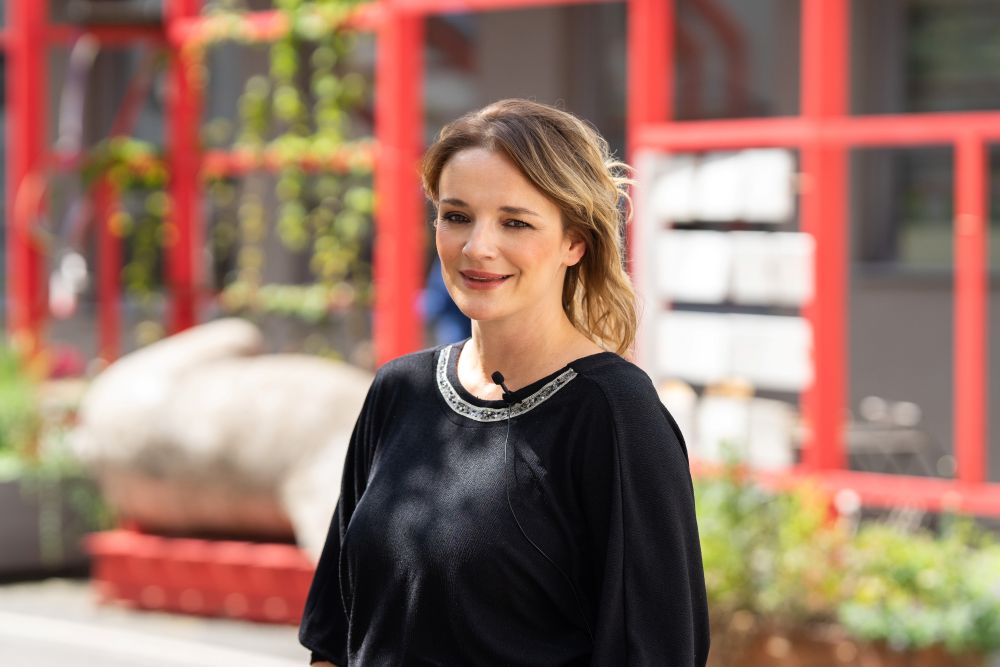
The project, costing nearly 30 million CZK, will introduce green roofs, vertical gardens, rainwater retention systems, permeable surfaces, and features designs made to cool public spaces during hot summer days.
When Kampus Hybernská was founded in 2017, few couldn't have imagined the significant role it would play in Prague's academic and cultural life. In less than a decade, the once-neglected complex has become a vibrant hub for students, researchers, artists, non-profit organizations, and the general public.
Sustainability principles have been part of Kampus from the very beginning. Much of the furniture came from refurbished stocks of the CU Faculty of Arts or from donated items. Today, a circular approach is evident throughout the entire premises: from the publicly accessible Circular Workshop to regular swap events and the Kampus Café, which was built primarily from recycled materials.
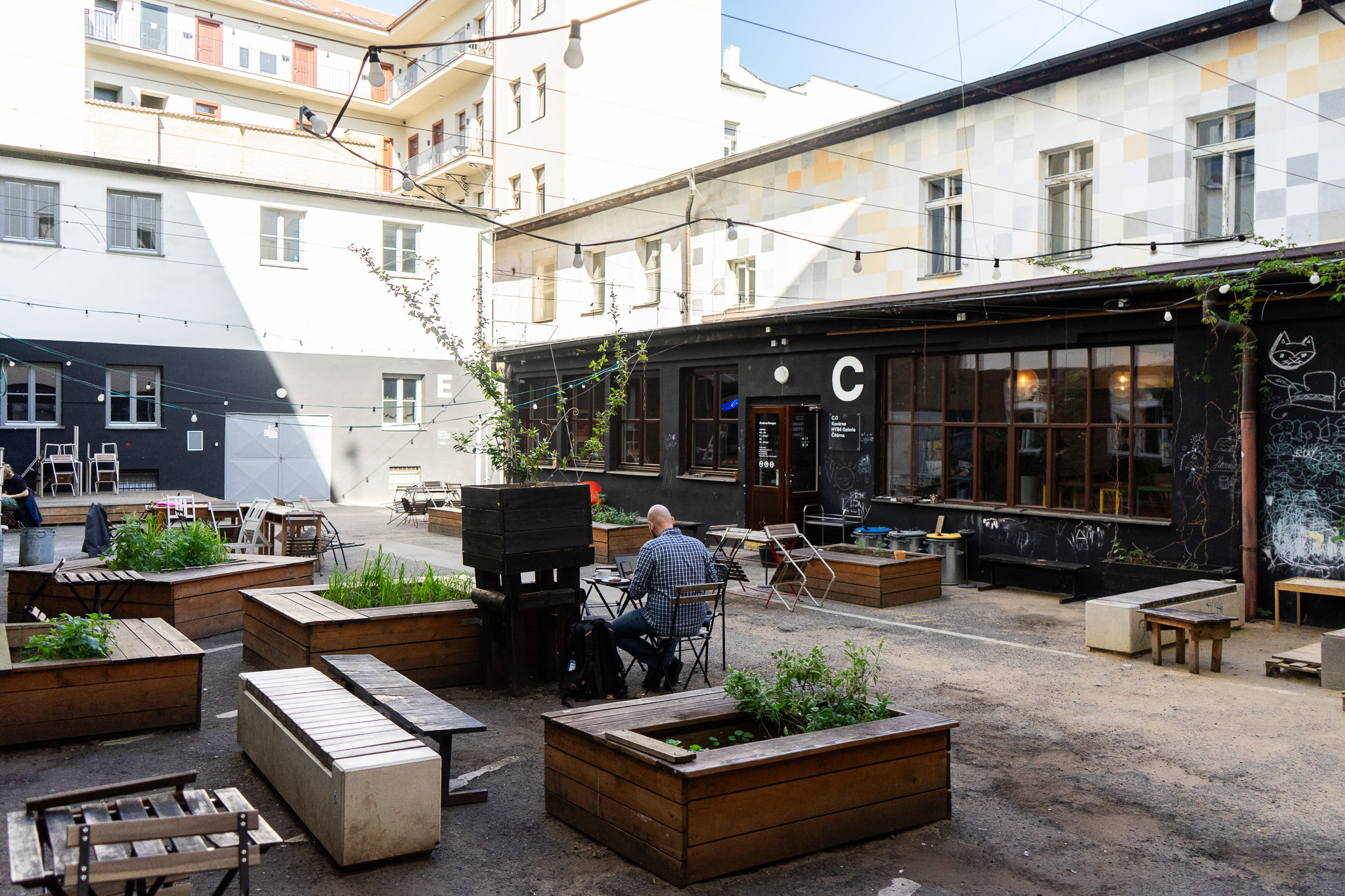
The Kampus community also includes the Institute of Circular Economy (INCIEN), whose work helps bridge daily operations with professional topics of sustainability and the circular economy.
The reconstruction will focus primarily on better rainwater management and mitigating the urban heat island effect. The project will include retention tanks with a total capacity of over 80 m³, accumulation systems, green features, and cooling misting systems. The historical piping and sewage systems throughout the complex will also be renovated.
According to Prague's Deputy Mayor for the Environment, Jana Komrsková, the project serves as an example that even in a densely built-up city center, it is possible to implement measures that improve the urban microclimate and contribute to meeting Prague's climate commitments.
Director of Kampus Hybernská Ema Pospíšilová sees the renovation as the next step in the long-term development of the site. She believes that the current description of the campus as an "oasis in the city center" will take on a much more tangible form thanks to new pergolas, green shelters, misting systems, and landscaped public spaces.

Prague 1 is one of the areas of the city most affected by the urban heat island effect. Dense development, a lack of greenery, and a high proportion of impermeable surfaces cause heat to accumulate here in the summer, while rainwater drains away too quickly.
The blue-green infrastructure project at Kampus Hybernská is therefore more than just an aesthetic upgrade to the courtyard. In practice, it demonstrates how solutions for climate change adaptation can be found even in a historic city center. The Kampus can thus become not only a more pleasant place for studying, working, and meeting, but also an inspiration for other similar projects in Prague and abroad.
Transforming such a large space will inevitably involve some limitations. Construction work will take approximately 18 months, during which the courtyard will be only partially accessible at times, and some outdoor events will need to be relocated. However, the program will continue, and we will provide ongoing updates on what is happening, when, and where.
The result will be a site that is better prepared for future climate challenges while offering a higher-quality environment for the daily lives of both the academic and wider urban communities.
Before construction begins, we’re going to make the most of the courtyard. You can find our summer plans on our website.