The new year is just around the corner, and we are wrapping up another successful season at Hybernská 4. It has been a year defined by collaboration, whether between the various departments of Kampus Hybernská or with our partners—from various faculties of Charles University, the Academy of Sciences, and FAMU, to external professionals.
After a summer break filled with Barbora Lepší’s exhibition and summer fiestas, we kicked off the autumn months in style right from September. A week after the start of the school year, our popularization and educational space, Didaktikon, hosted lectures as part of Digital Czechia Week. In addition to a conference focused on the intersection of AI, art, and literature,we also opened a new exhibition called GenGen, which explores the generative generation using AI.
Didaktikon also co-hosted the eighth annual European Day of Languages festival alongside the Faculty of Arts at Charles University and the European Commission Representation in the Czech Republic. Visitors had the chance to try out mini-lessons in fourteen languages: Catalan, Icelandic, Welsh, Irish, Sami, Finnish, Armenian, Serbian, Hungarian, Romanian, Slovenian, Albanian, Croatian, and Czech Sign Language.
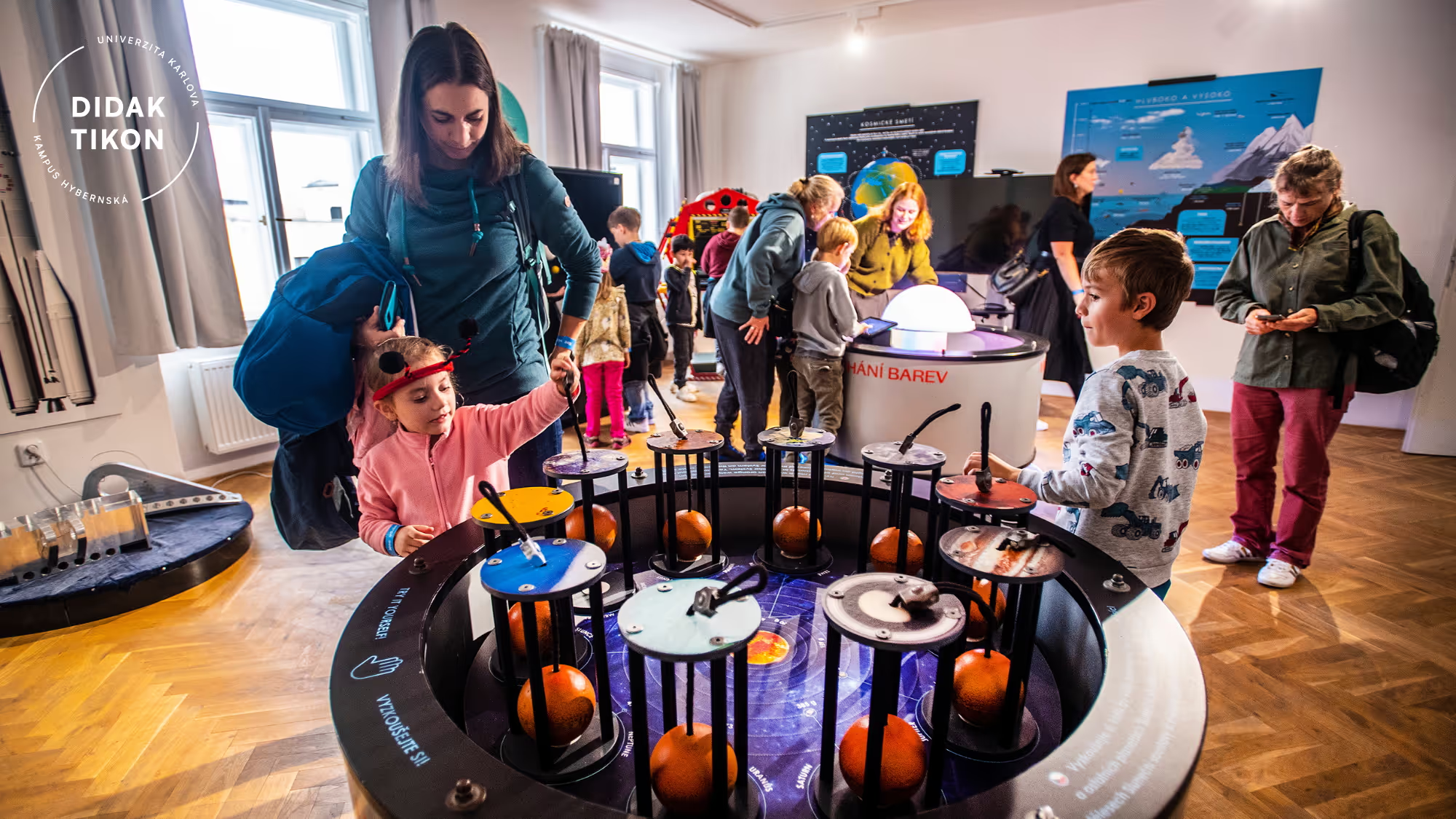
Two days later, on Friday, September 26, Didaktikon welcomed visitors for the nationwide Researchers' Night. That afternoon, the space transformed into a laboratory for our youngest researchers, featuring a special program for children aged three and up and their parents.
The program also included another Science Café meeting hosted by Charles University, this time on the topic of Populism and Democracy. The discussion featured Tomáš Dumbrovský from the CU Faculty of Law and Věra Jourová, Vice-Rector of Charles University and former European Commission Vice-President for Values and Transparency.
Didaktikon, the popularization and educational center has opened to the public in October. Every Monday and Thursday from 3:00 PM to 6:00 PM, visitors can come and discover that science can be fun for both children and adults.
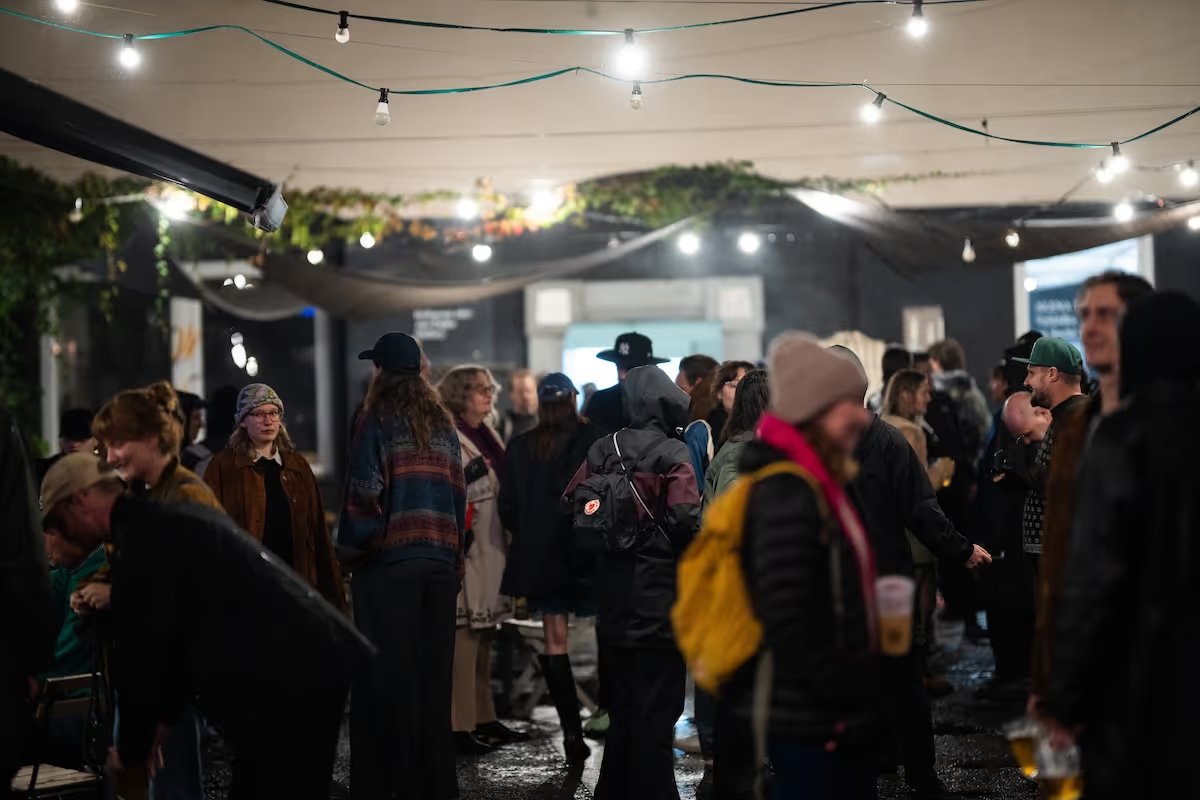
This year, Kampus Hybernská once again joined the neighborhood festival Zažít město jinak. Along with the traditional program in the Circular Workshop and refreshments at Kavárna Kampus, visitors could enjoy the theatrical performance Hotel K. by the Das Thema cabaret or a piano concert via wireless headphones. A specially modified piano allowed guests to enjoy a private concert while still being close to other listeners. This unique Silent Classic concept was prepared by Vážný zájem.
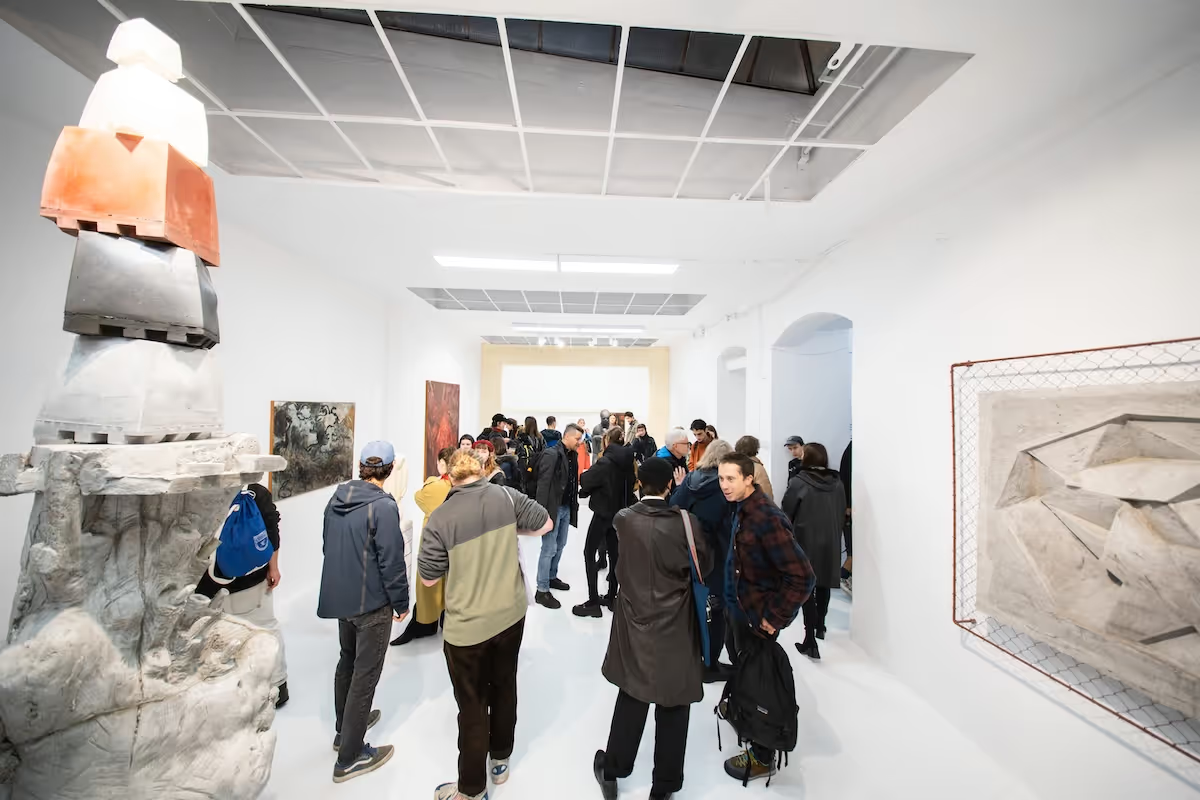
The grand opening of this year's autumn season took place on Thursday, September 25, starting at 6:00 PM with a joint opening of two exhibitions and a concert. In A.1 HYB4 Galerie curators and FAMU representatives opened an exhibition dedicated to 50 years of the FAMU Department of Photography. In C.0 HYB4 Galerie three artists were introduced: Hana Garová, Ondřej Filípek, and Vojtěch Míča. They created a collaborative work in which painting grew through matter and the figures took on new meaning. The TO/IT exhibition combined painting, drawing, and sculpture.
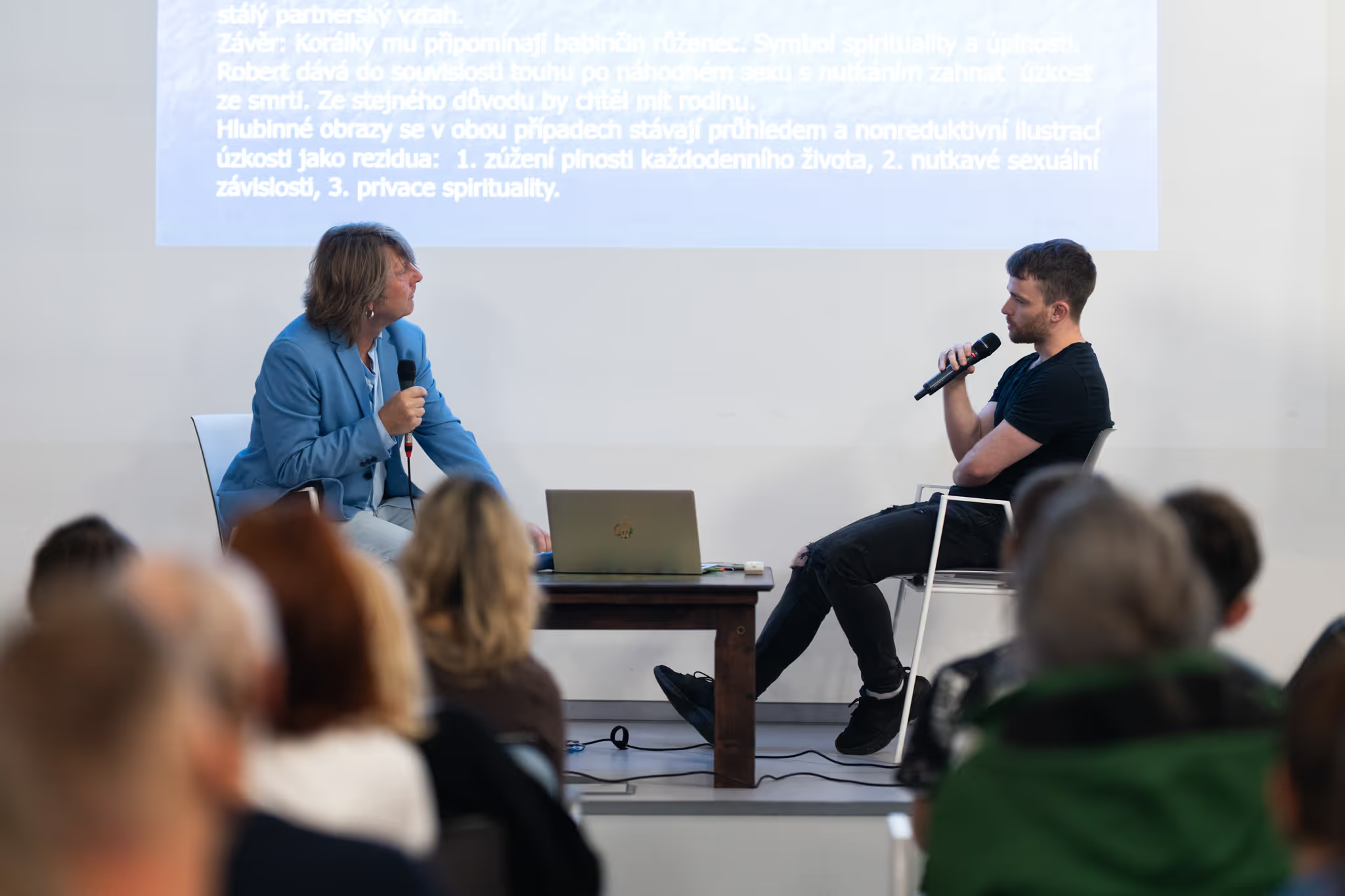
Alongside the exhibitions, the same week also featured a lecture series focused on Jungian analytical therapy. A total of four experts presented Jung’s ideas and the fundamental principles and contexts of therapy, which focuses on working with the unconscious, archetypes, and the process of individuation.
HYB4 Galerie closed out the year with the exhibition Jan Stolín: The Luster of Night. In the coming year, the curators intend to focus on contemporary art while supporting emerging artists, who will be the primary users of the newly established HYB4 Art Studios in Building A.
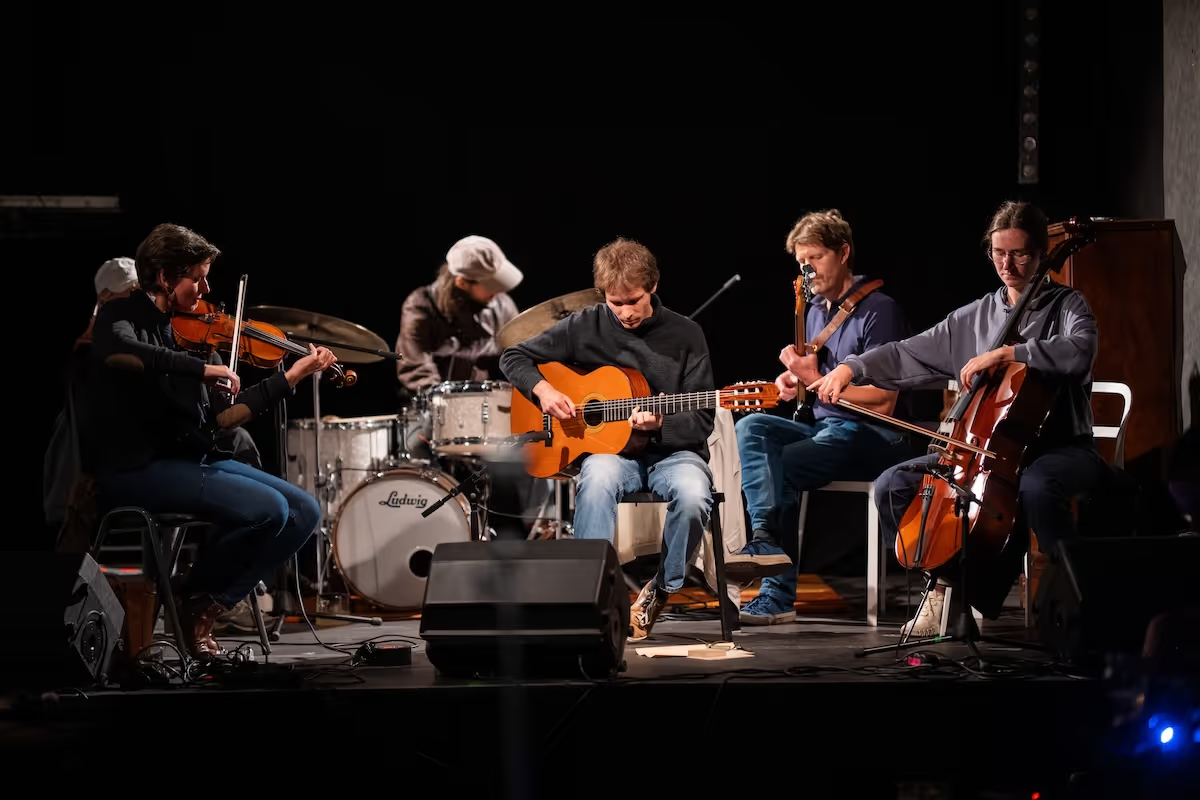
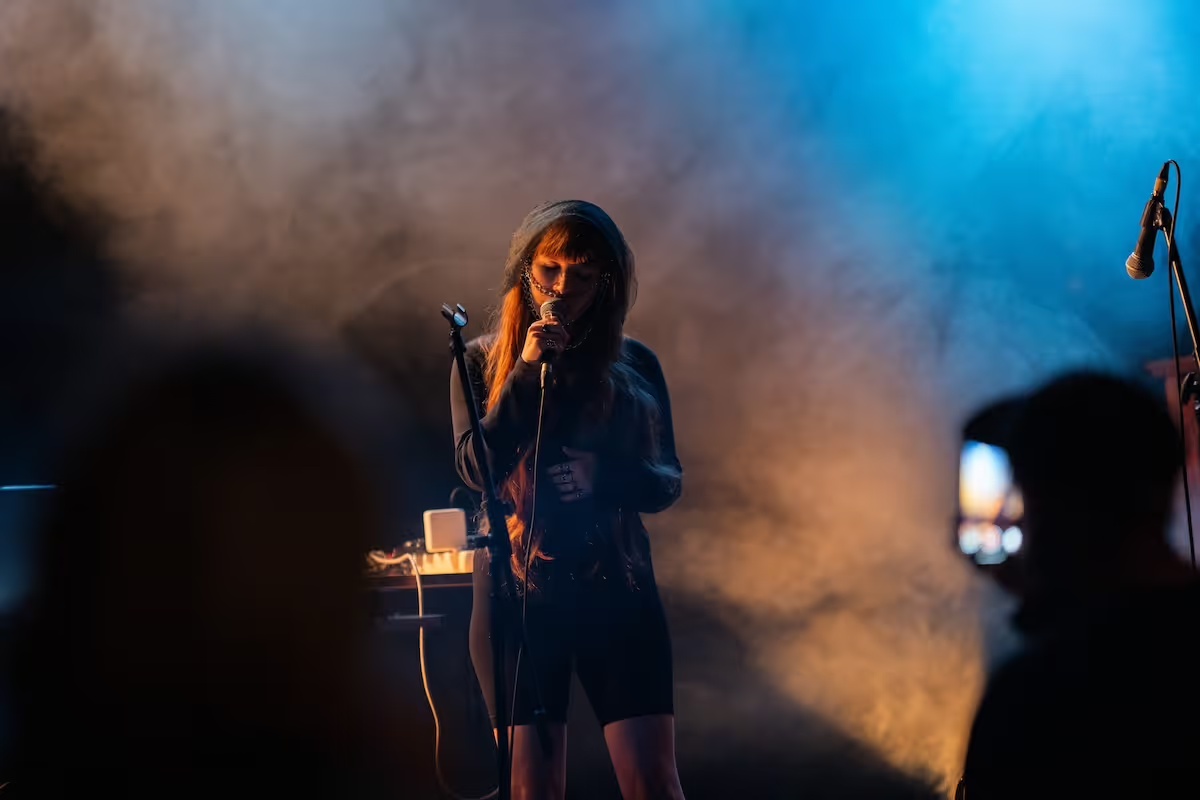
Autumn music evenings were enriched by a series titled Wombat Live Sessions. The project builds on a successful format of audiovisual live concert recordings that have been enriching the Czech music scene since 2018, and this year, for the first time in its history, it is expanding to include public concerts. At the end of October, the music curators at Kampus Hybernská presented the first of two live concerts, which was preceded by recordings in unusual locations around the Kampus. It featured Arleta together with yeezuz2020.
The second concert took place on December 20 and featured the Czech indie folk band from Pilsen, Ida the Young together with Jakub Šimanský. It was preceded by the release of a video session in which the five-piece band Ida the Young presented their debut album, which they also performed live in E.0 Sál at Kampus Hybernská.
On October 1, the opening of the 2025/2026 academic year at Charles University awaited new students—an afternoon full of music, student organizations, and accompanying activities.
At the end of October the university section of Kampus Hybernská, Hyb4City, prepared the first installment of a new series called CrossTalks. The meeting took place as part of Czech Space Week and was co-organized by Hyb4City and CzechInvest, with support from expert teams from the Faculty of Science and the Faculty of Mathematics and Physics at Charles University. CrossTalks are designed as curated gatherings that connect academia, business, and public administration. The goal is not to create finished projects, but to open a dialogue, identify needs, and discover where individual stakeholders can find common ground.
Twenty-eight participants from 17 institutions arrived at Kampus Hybernská, including nine companies and startups working with satellite data—from Agdata and World from Space to TRL Drones. Alongside representatives from Charles University, experts from the State Agricultural Intervention Fund, the EU Agency for the Space Programme, and the Ministry of Transport were also in attendance.
Also n October, Hyb4City hosted another discussions – this time on transatlantic relations in the era of "America First" as part of the Café Collaborations series. Guests included Canadian Ambassador Emily McLaughlin and Jan Hornát from the Faculty of Social Sciences at Charles University. In November, ECHR judges and experts spoke on current human rights issues to mark the 75th anniversary of the European Convention on Human Rights.
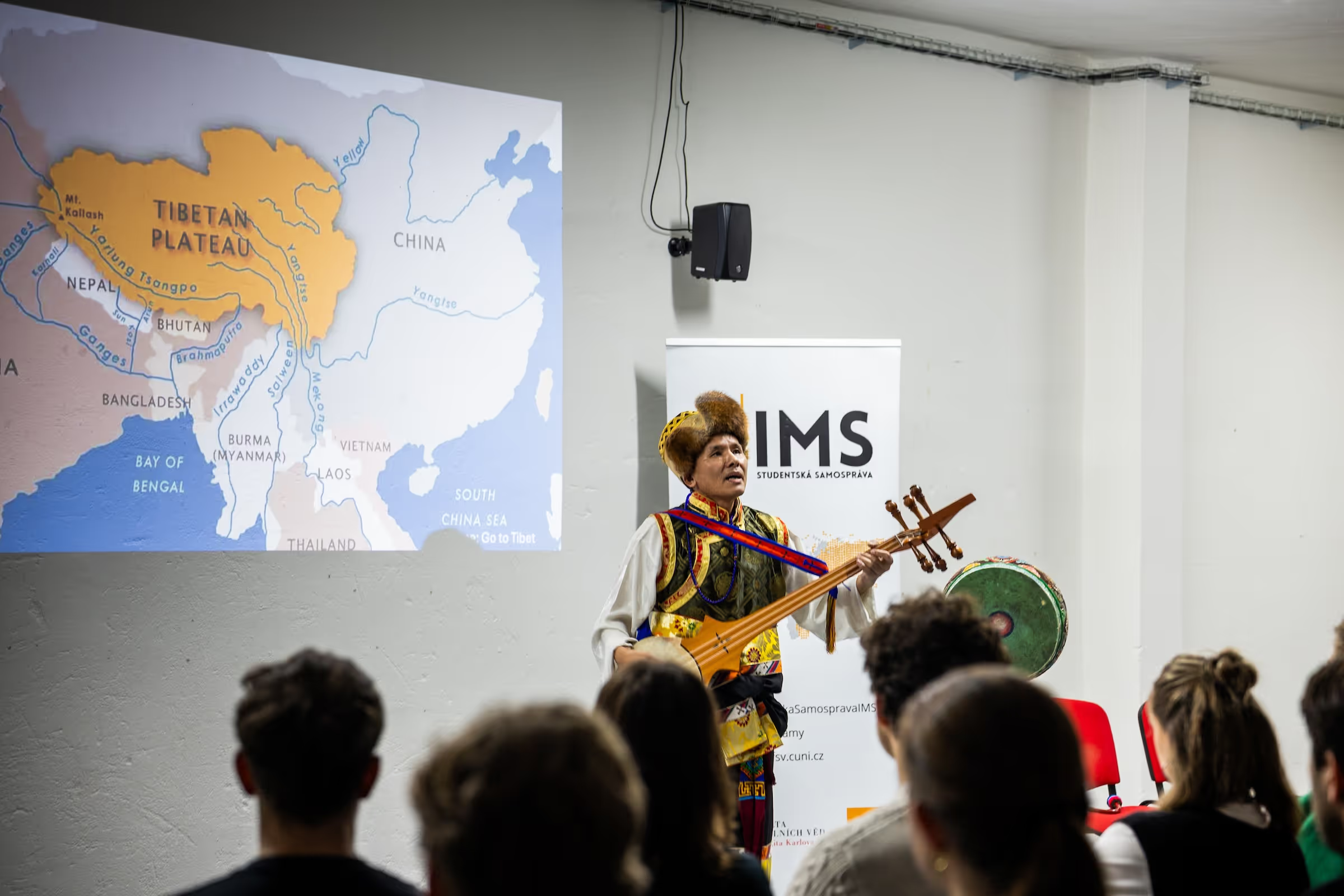
Students were also busy this autumn, for example with a series on mental training focused on wellbeing and the development of psychological resilience. At the beginning of November, they organized a meeting with Tibetan musicians. The presentation of Tibetan culture, which is currently at risk of disappearing, was followed by a debate on the succession of the Dalai Lama and the future of Tibet.
Studentská Hybernská also builds community through regular campfire gatherings—complete with singing, roasting sausages, and good company.
The literary section HYB4 Čítárna organized, for instance, a meeting with prominent contemporary journalists—Zdislava Pokorná, Lucie Stuchlíková, and Marina V. Šternová—titled We Are What We Read, an evening about Karen Blixen or a debate on the topic of artificial intelligence and its impact on the creation and analysis of texts. In addition, together with the film section, they prepared a screening of a documentary Change my mind followed by a discussion.
At the beginning of December, the editorial team of Revue Prostor released a new issue on the theme of "Sound and Hearing! On the Waves of Sound Studies", curated by historian of science and religious scholar Anna Kvíčalová.
The curators of the film section HYB4 Film organized a series of film pub quizzes, professional discussions, listening evenings, and interesting screenings, such as a selection of Christmas films from FAMU.
In the Artivist Lab gallery, two exhibitions were on display during the autumn. LEPERIBEN: WE DO NOT FORGET presented a cultural and political gesture aimed at honoring the memory of Roma victims of National Socialism while reflecting on the persistent historical amnesia that has surrounded Roma suffering for decades. The exhibition Sweet & Sour, which is on view until mid-January, is a visual dialogue between appropriation and return – between what was sweetly charming and what remained bitterly forgotten. Karíma Al-Mukhtarová does not engage or impose, but works with the human subconscious. Her artistic approach to "identity politics" is generous, just like the meaning of her name.
And the Jan Čejka Gallery presented artists Alena Vršanská, Jakub Sýkora, and Petra Malinová.
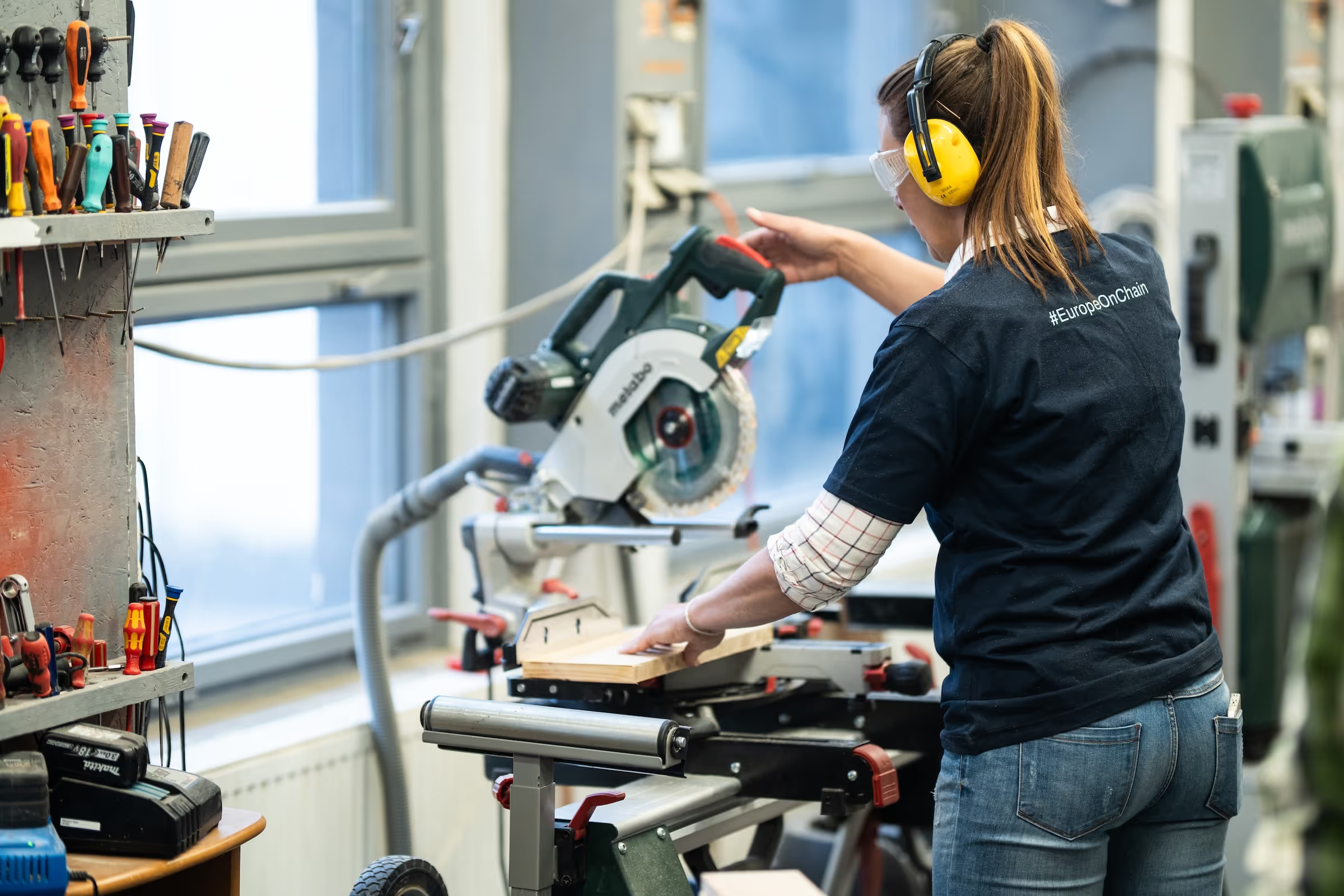
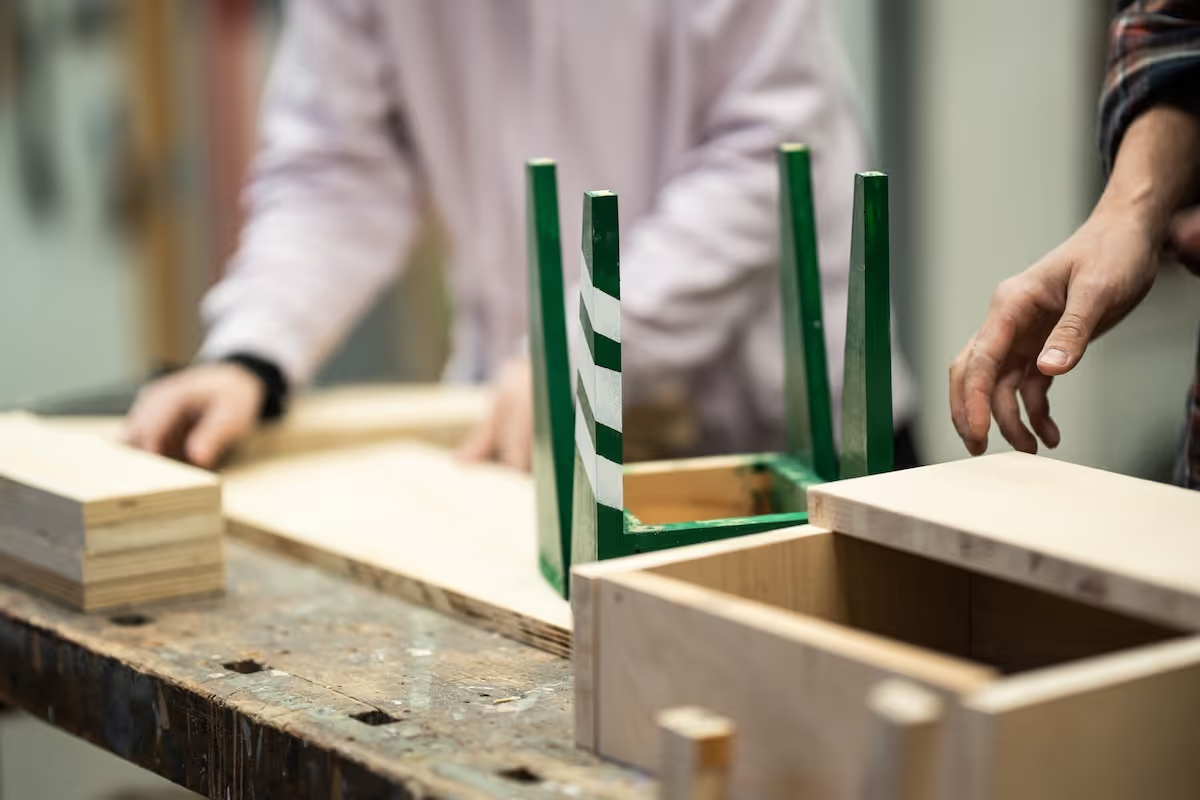
Kampus Hybernská is not just about cultural and educational events, but also DIY projects, such as those created in the Circular Workshop during various workshops. This autumn, we launched a new workshop program in collaboration with SheBuilds. This new range of workshops is aimed at those who don't want to rely on handymen and want to learn how to drill, join wood, or repair household appliances themselves. This successful series will continue into the coming year.
Phew, there were so many experiences that they wouldn't even fit into a single article. Thank you for sharing them with us! We can promise that in 2026, we'll bring you a whole range of events— cultural, educational, or circular—that you won't want to miss.
.avif)
.avif)