
Date
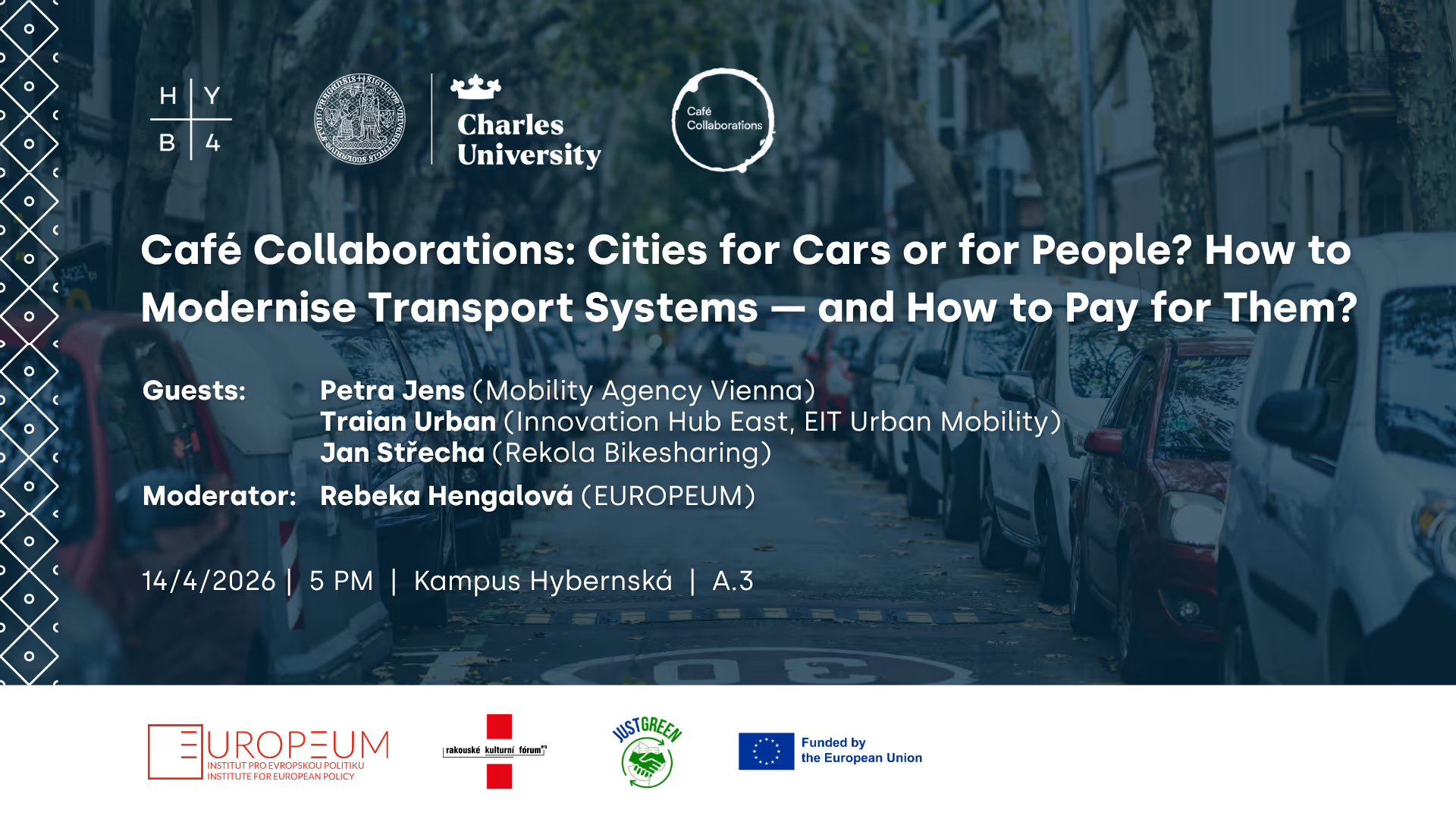
Czech public transport is highly developed — yet cars still enjoy a privileged position. Our cities and transport systems continue to be designed primarily for individual car use, despite its economic costs and environmental impact.
Join us for an engaging discussion on how we can rethink and modernise mobility. Together with experts from European cities, we will explore real-life examples where pedestrian and zero-emission zones, affordable or even free public transport, and innovative solutions — such as low-cost electric car rentals for low-income households or shared e-scooters for young people — are already part of everyday life.
· Is large-scale decarbonisation of transport truly sustainable?
· Are these measures financially realistic?
· Where can funding come from?
· And do transport companies andhouseholds genuinely want to reduce emissions?
We will seek answers to these pressing questions together with:
Petra Jens has served as Vienna’s WalkingCommissioner since 2013, where she works to strengthen the role of walking as a centralelement of liveable cities. Her role focuses primarily on communication,advocacy, and long-term cultural change rather than regulation orinfrastructure delivery.
At the Mobility Agency Vienna, Petra acts as a connector betweencitizens, policymakers, and urban systems. Through communication strategies,advisory hours, and public events like 'Walking Cafés,' she connects citizensdirectly with local experts and district leaders to discuss neighborhoodimprovements and help shape a broader transformation of mobility systems.
To drive this culture change, she initiates city-wide awarenesscampaigns, coordinates community walking events, and develops educationalmobility programs for children. She helps to ensure the everyday pedestrianperspective is actively integrated into Vienna's urban planning.
Trian Urban holds a PhD in European Studies from Charles University in Prague and a degree in Political Science from Complutense University of Madrid. He has extensive experience in senior management, focusing on business creation, development, and innovation strategy, with a strong track record of fostering cooperation between investors, startups, and research centres. He has lectured at universities on European economic integration and Latin American economic development, and has served on numerous committees and expert groups in smart cities, urban planning, healthcare, and education.
Jan Střecha has been at the helm of Rekola's marketing for over four years. He also has experience as an event manager from the production company BrainWave or as a dramaturge at the Student Fest festival. He graduated with a bachelor's degree in Communication Studies from FSV UK, then successfully completed a master's degree in Sports, Culture and Events Management at FH Kufstein in Austria.
Rebeka Hengalová studied Socio-ecological Economics and Policy at the Vienna University of Economics and Business. Now, she focuses on transport poverty in the context of the Emission Trading System (ETS2) implementation and its mitigation through the Social Climate Fund.

